Where a mast lift makes sense
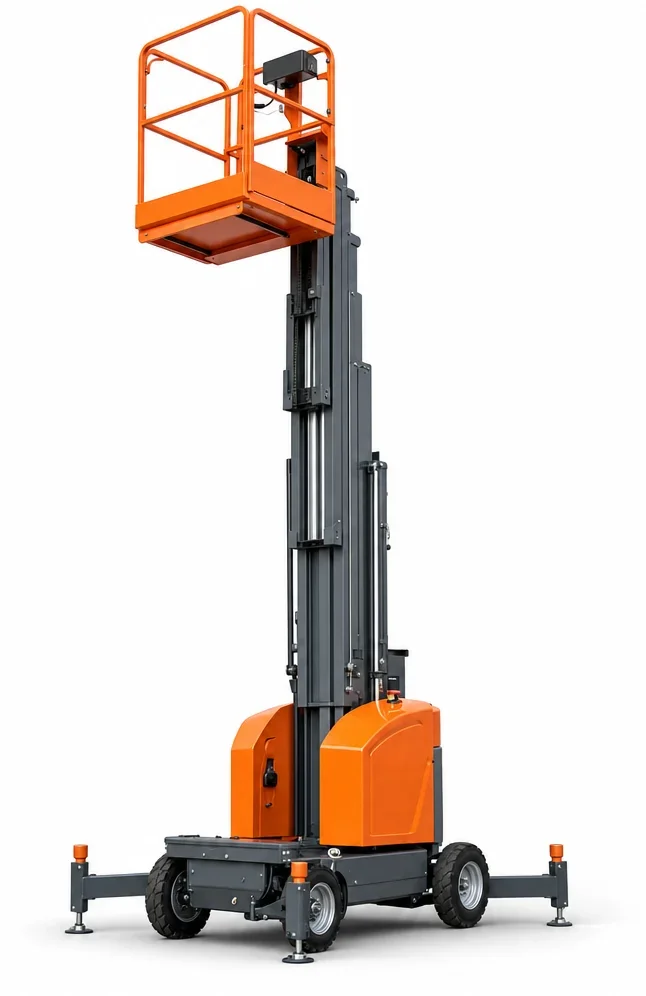
If the machine can sit directly below the task and height is modest, a mast lift reduces footprint and floor load. Typical jobs include sensors over lines, lighting along narrow aisles, and light maintenance around production cells. For longer reaches or up-and-over paths, compare /articulating-boom-lift-rental/ or /electric-scissor-lift-rental/ based on height and platform size.
Floors and tires in Rockford interiors
Many local facilities protect slab finishes and require non-marking tires with low point loads. Mast lifts often carry smaller footprints and can navigate coated floors with less impact than larger machines. Confirm wheel load and route constraints, especially across expansion joints, dock plates, or thresholds.
Access routes and doors
Measure the narrowest pinch point on the route, not just the aisle near the task. Check door clearances under mezzanines and at interior roll-ups. Some units allow near-zero turning within standard aisle widths, which matters in dense storage or around machinery guards.
Weather and scheduling
Severe winter weather can push exterior tasks indoors, increasing demand on compact access for overnight maintenance in active facilities. Actual site conditions, the selected unit’s instructions, and site procedures govern how and when elevated work proceeds.
Narrowing the mast lift choice
- Can the machine sit below the task without an up-and-over requirement?
- Minimum aisle width and inside turning radius at the work zone
- Floor and wheel load limits on coated or specialty slabs
- Platform capacity and tool weight for the planned task duration
Related planning resources
- Wider platforms on slab: /electric-scissor-lift-rental/
- Up-and-over maintenance: /articulating-boom-lift-rental/
- General category overview: /aerial-lift-rental/