Start with the work geometry
Scissor lifts move straight up. The machine usually needs to sit below the task with enough platform height and reach to cover the work zone. Measure: - Maximum working elevation and any obstructions below - Required platform width to fit between racking or equipment - Turning room at access points, dock doors, and corridors
In Rockford’s large distribution buildings, aisles and mezzanines can squeeze width and turning radius. In manufacturing areas, overhead utilities and crane rails may limit set-up spots even when the ceiling is high.
Surface and flooring conditions
Surface type is the main divider between categories: - Indoor slab floors: favor electric slab scissors with non-marking tires and tighter turning. - Unfinished or variable ground: consider rough‑terrain units with larger tires and four‑wheel‑drive capability.
Cold winters and wet shoulder seasons in the regional climate push many projects indoors for part of the year. Expect transitions from rough‑terrain outside to electric units once interior slabs cure.
Weight, footprint, and access
High-tech production floors and mezzanine structures often have specific floor load and tire contact requirements. Know: - Machine weight and wheel load vs. slab rating - Platform capacity for tools and parts - Stowed height to clear doorways
Dock thresholds, elevator cabs, and tight truck courts around local distribution buildings can also set hard limits on length and width.
When to consider other aerial types
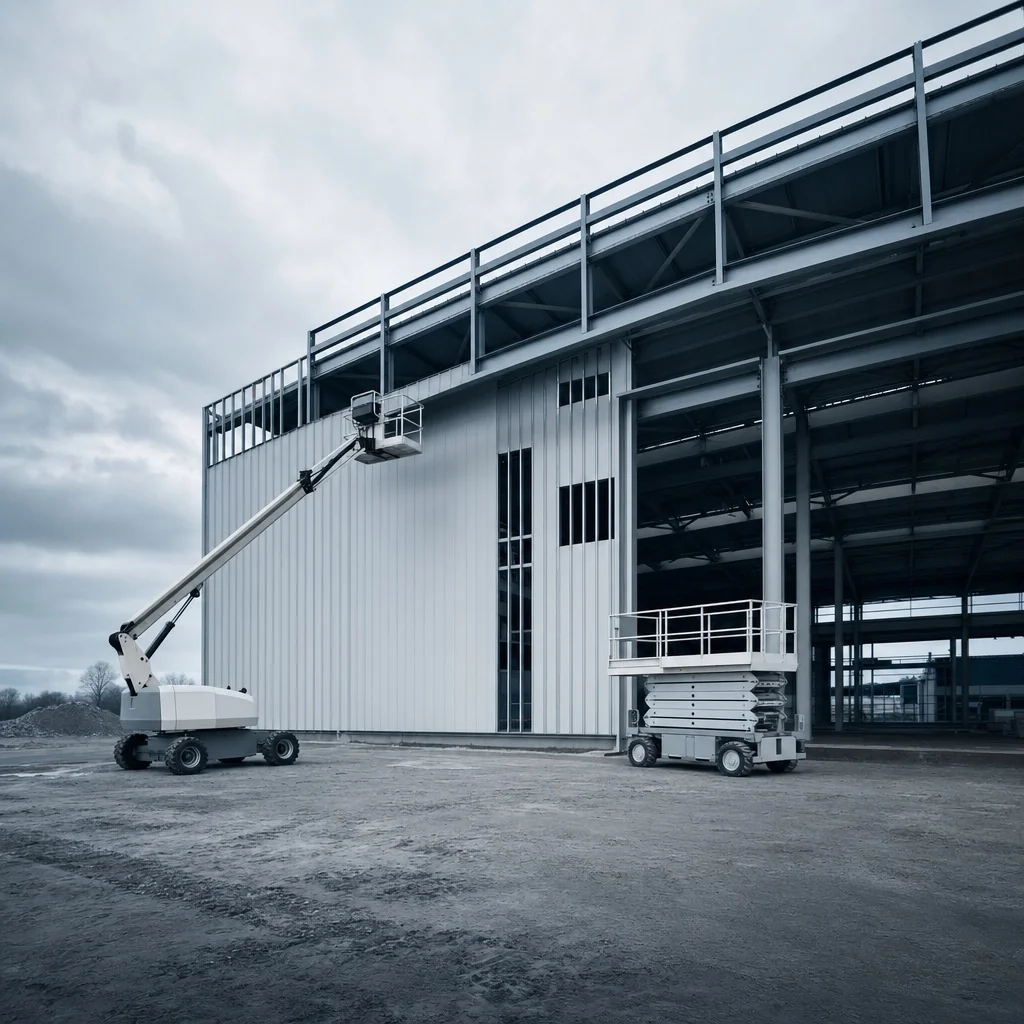
If the lift cannot sit under the task due to conveyors, process lines, or racking, a boom lift may be a better fit for up-and-over reach. Compare options at /aerial-lift-rental/ or go directly to /boom-lift-rental/ for details.
Rockford project patterns
- Logistics hubs run around the clock; compact electrics fit interior pick modules and sortation areas.
- Aerospace and advanced manufacturing favor slab machines with precise maneuvering and low emissions indoors.
- New industrial developments and expansions lean on rough‑terrain units until slabs are poured.
Explore indoor units at /electric-scissor-lift-rental/ and outdoor models at /rough-terrain-scissor-lift-rental/.
Contact
Questions about surface type or weight limits? Call (815) 706-5407 or use /contact/ to outline the ceiling height, floor rating, and access path.