Site conditions come first
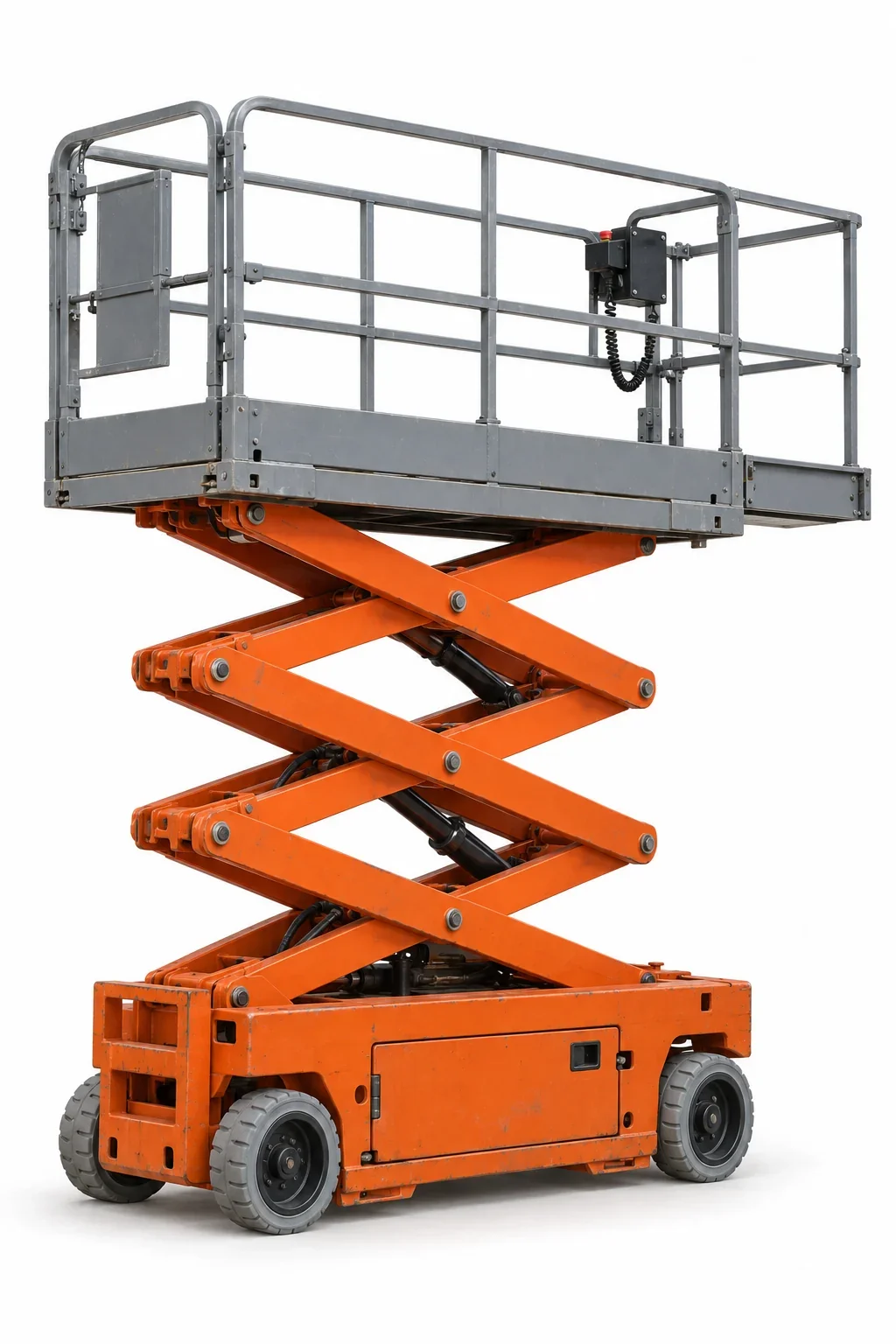
These units are built for variable surfaces, but actual conditions, the selected unit’s instructions, and site procedures govern use. Key factors: - Ground firmness and grade along travel paths - Tire type and four‑wheel‑drive needs for soft or rutted areas - Platform width vs. staging space around steel, panels, or façade work
Weather patterns in Northern Illinois
Freeze–thaw cycles and storms can soften work areas quickly. Plan for transitions: rough‑terrain units during grading and structural phases, then electric slab lifts once interiors are enclosed. Compare indoor options at /electric-scissor-lift-rental/.
Height, capacity, and footprint
Rough‑terrain scissors often trade maneuverability for capacity and deck size. Check: - Working height needed for exterior walls, roof edges, or utilities - Platform capacity for crews and materials - Transport width and gate openings at temporary fencing or laydown
Access around industrial development
New and expanding industrial sites near Rockford tend to have long travel distances from laydown to elevation points. Consider fuel type, gradeability ratings, and turning space at staging pads when selecting a size class.
When a boom lift fits better
If set‑back or obstacles prevent parking under the work face—such as needing to reach over piping or façade features—look at /boom-lift-rental/ for up‑and‑over reach or see the overview at /aerial-lift-rental/.
Contact
Share ground conditions, height targets, and staging constraints at /contact/ or call (815) 706-5407.