What shapes lift decisions in Rockford
Work in Rockford moves between climate-controlled industrial interiors and active outdoor projects. Winter snow and freeze-thaw cycles push many tasks indoors; humid summers and storms complicate exterior schedules. That swing affects power source, tire type, and ground clearance.
- Indoor logistics halls and manufacturing floors often call for compact electric scissor lifts with non-marking tires and tight turning radii.
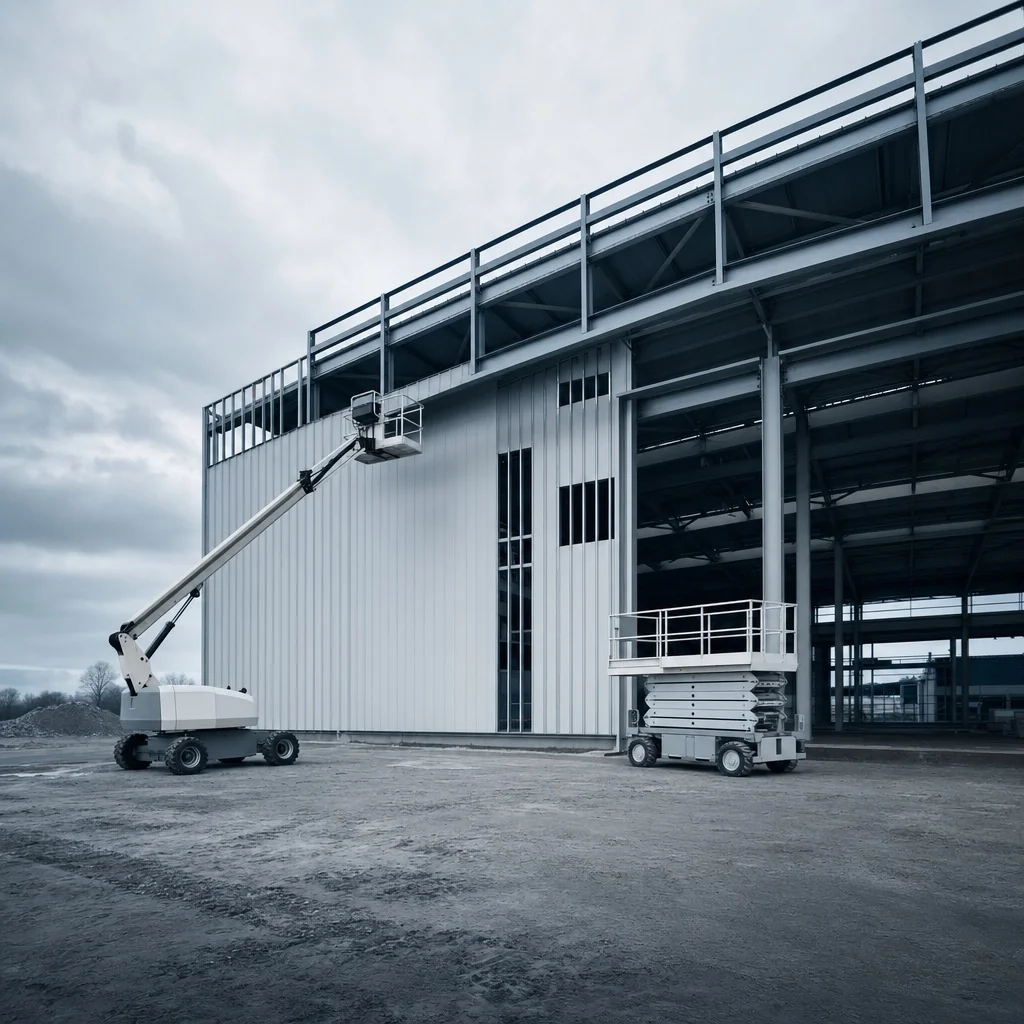
- New warehouse construction and site expansion lean toward rough-terrain scissor lifts or booms with four-wheel drive to handle soft ground and uneven grades.
How we frame the comparison
Instead of generic features, the content starts with job geometry and surface conditions.
- Can the machine sit below the task, or does it need outreach around conveyors, ductwork, or mezzanines?
- What does the floor permit for tire material, point loading, and overall machine weight?
- Will seasonal mud or frost heave require higher ground clearance and wider tires?
This approach keeps the conversation practical for Rockford’s mix of cargo handling, assembly lines, and construction.
Where to go next
Looking at indoor tasks on finished slabs, start with electric scissors at /electric-scissor-lift-rental/ or vertical masts at /vertical-mast-lift-rental/ when aisles get tight. For exterior staging, see /rough-terrain-scissor-lift-rental/ or consider booms at /boom-lift-rental/ for reach over conveyors and rooflines. Material placement comparisons begin at /telehandler-rental/ and /forklift-rental/.
Actual conditions, the selected unit’s instructions, and site procedures govern elevated or exterior work. Use the specs as planning inputs, then confirm them against the jobsite and the machine documentation.