Aisles, doors, and turning
The truck must turn with a load without clipping racking, columns, or guardrail. Key checks include:
- Aisle width against the truck’s right-angle stack dimension
- Overhead obstructions such as sprinklers and conveyors
- Door height and width for every transition, including interior roll-ups
If the route leaves the slab for exterior staging, confirm dock plate ratings and slope. For outdoor-only handling or uneven ground, see /telehandler-rental/.
Floors and tires in Rockford facilities
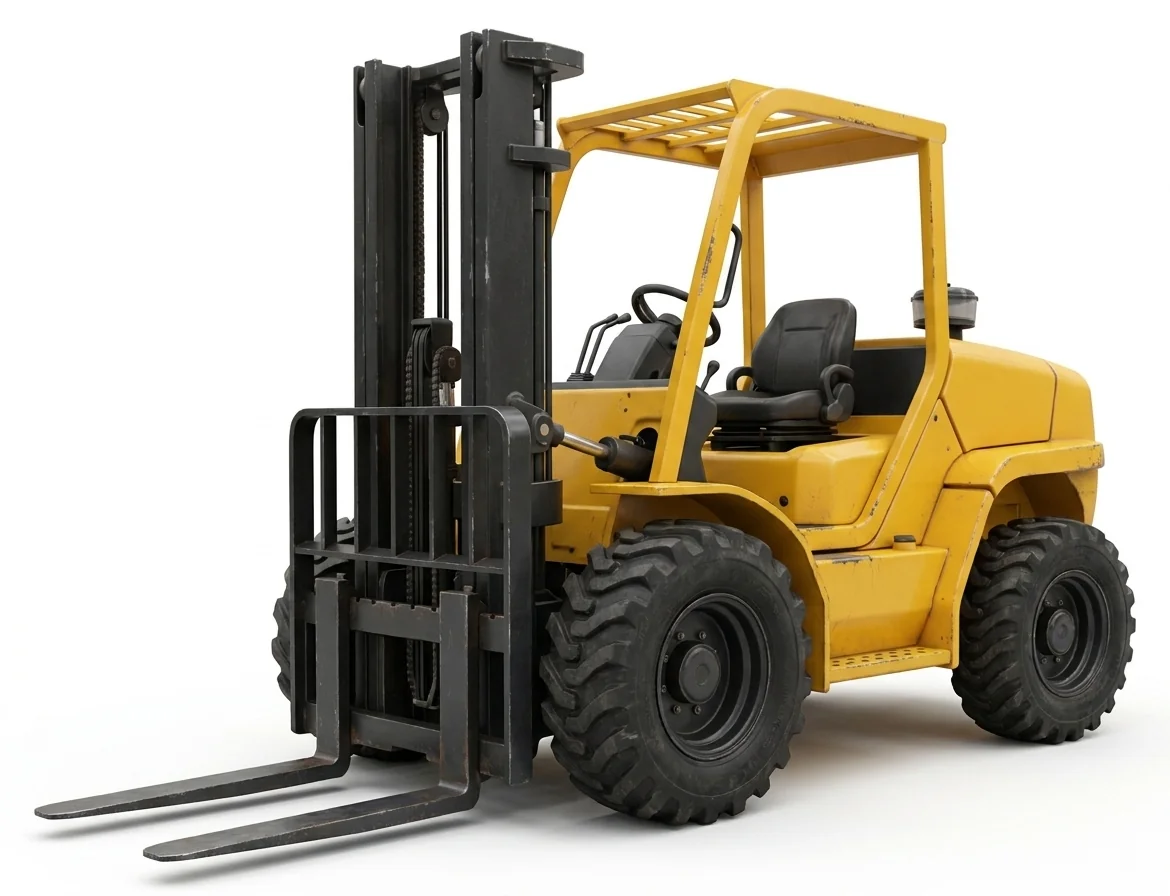
High-tech manufacturing spaces often specify non-marking tires and limits on wheel load. Electric cushion-tire trucks work well on smooth interior slab with tight aisles. Pneumatic-tire units handle mixed indoor-outdoor routes and rougher surfaces but may not meet some floor or cleanliness requirements. Map tire type to the most sensitive segment of the route.
Power source and duty cycle
Electric trucks suit long indoor shifts with ventilation constraints. Internal combustion models can handle heavier loads and outdoor work but may face restrictions indoors. Battery change space, charging access, and shift length all affect the decision.
Weather and staging
Winter conditions in Rockford can ice exterior aprons and ramps, affecting traction and braking distances. Summer storms can leave standing water near docks. Actual conditions, the selected unit’s instructions, and site procedures govern safe operation and staging choices.
Narrowing the forklift category
- Load weight, dimensions, and lift height at the storage location
- Right-angle stack and turning room in the narrowest aisle
- Tire type and wheel load limits for sensitive floors
- Power source aligned to shift length and ventilation rules
Related planning resources
- For elevated personnel access: /electric-scissor-lift-rental/
- Material placement over rough ground: /telehandler-rental/
- Short hops to mezzanine maintenance: /vertical-mast-lift-rental/