Start with where the unit can sit
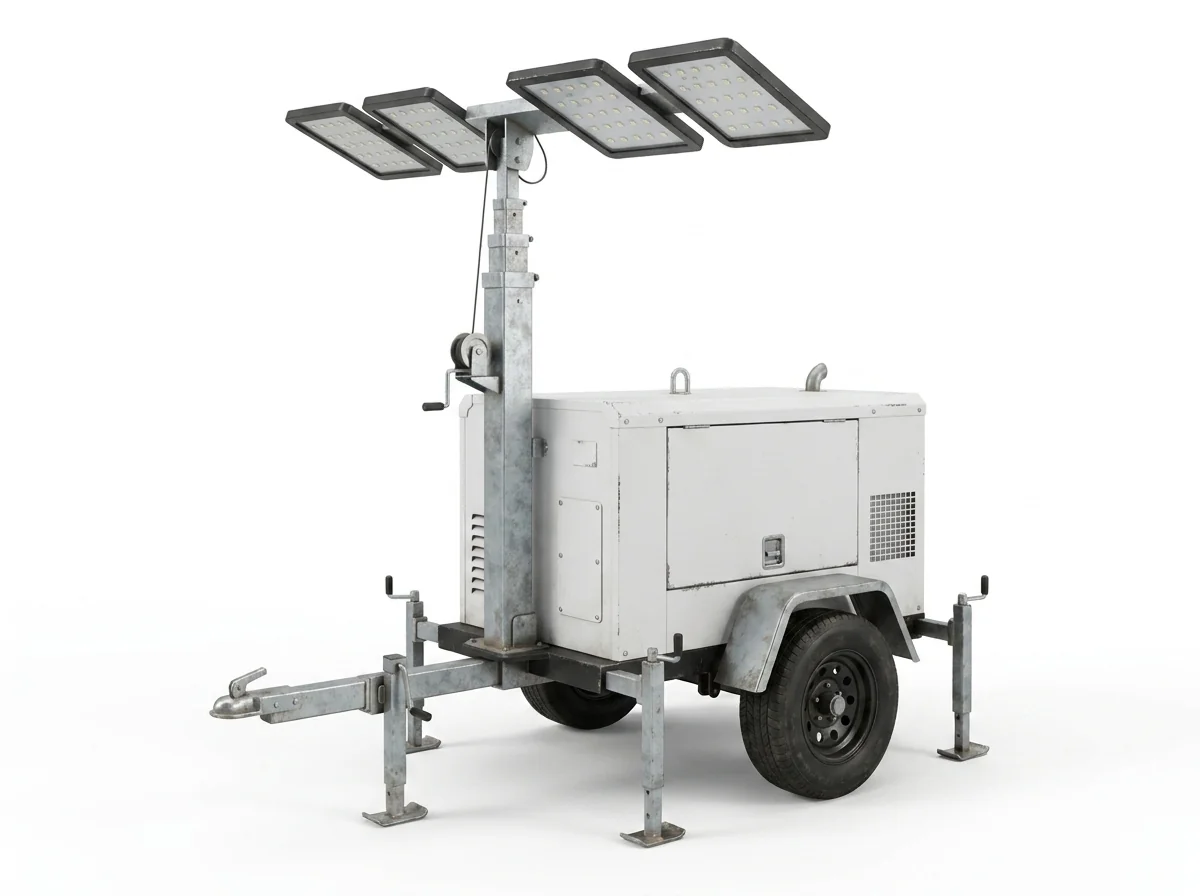
Generators and light towers often live at the edge of activity. In Rockford’s large distribution buildings, masts usually need to sit outside dock traffic and away from insulated slab joints. On industrial sites, the pad can be compacted gravel or seasonally soft soil; the regional climate brings freeze–thaw and summer storms that can change support conditions within a day. Note whether the machine can sit below the task, offset to the side, or must be centered.
- For indoor tasks, confirm if power can be drawn from an existing panel before considering a generator. If ventilation is limited, electric power distribution may be preferred over engine-driven units.
- For outdoor lighting, sightline obstructions from stacked materials and trailers matter more than mast height alone.
Power planning for Rockford shifts
Local logistics and aerospace work often runs extended or overnight schedules. That sets run-time and refueling expectations.
- Identify the longest continuous shift and whether quiet hours apply near nearby communities.
- Map refuel or recharge windows around gate security and ramp curfews common to cargo operations.
- In winter, cold starts and thicker fuels can affect output and startup time; in summer, heat and thunderstorms can drive sudden shut-downs.
Surface and access route
The route from staging to the set position narrows the choice.
- Slab and paved routes: wheel a compact tower or cable distribution cart through dock doors and narrow corridors.
- Rough routes: four-wheel-capable towable towers and skid-mounted generators handle mud and frost heave better on new construction pads.
- Door and gate widths, grade breaks at dock aprons, and weight limits on mezzanine slabs all constrain unit size.
Light coverage and glare control
Cargo aprons and yard staging need broad, even coverage without washing out driver sightlines.
- Aim for fewer shadows across forklift aisles and aircraft service paths rather than just lumens at the mast.
- Wind exposure on the open plateau near logistics parks can push mast stability limits; site procedures and the selected unit’s instructions govern deployment.
Related access equipment
If maintenance crews also need elevation for fixture swaps or panel work, compare lifts here:
- Indoor slab work: /electric-scissor-lift-rental/
- New-build or yard work: /rough-terrain-scissor-lift-rental/
- Over-obstacle reach: /articulating-boom-lift-rental/ and /telescopic-boom-lift-rental/
When generators make sense
Where panels are maxed out or power is distant on a spread-out industrial site, a generator avoids long temporary cable runs across traffic. On active construction in Rockford’s expanding warehouse zones, towable sets with larger tanks reduce trips across soft ground. Indoors, consider whether a temporary power distribution plan from an existing panel reduces noise and exhaust concerns.